
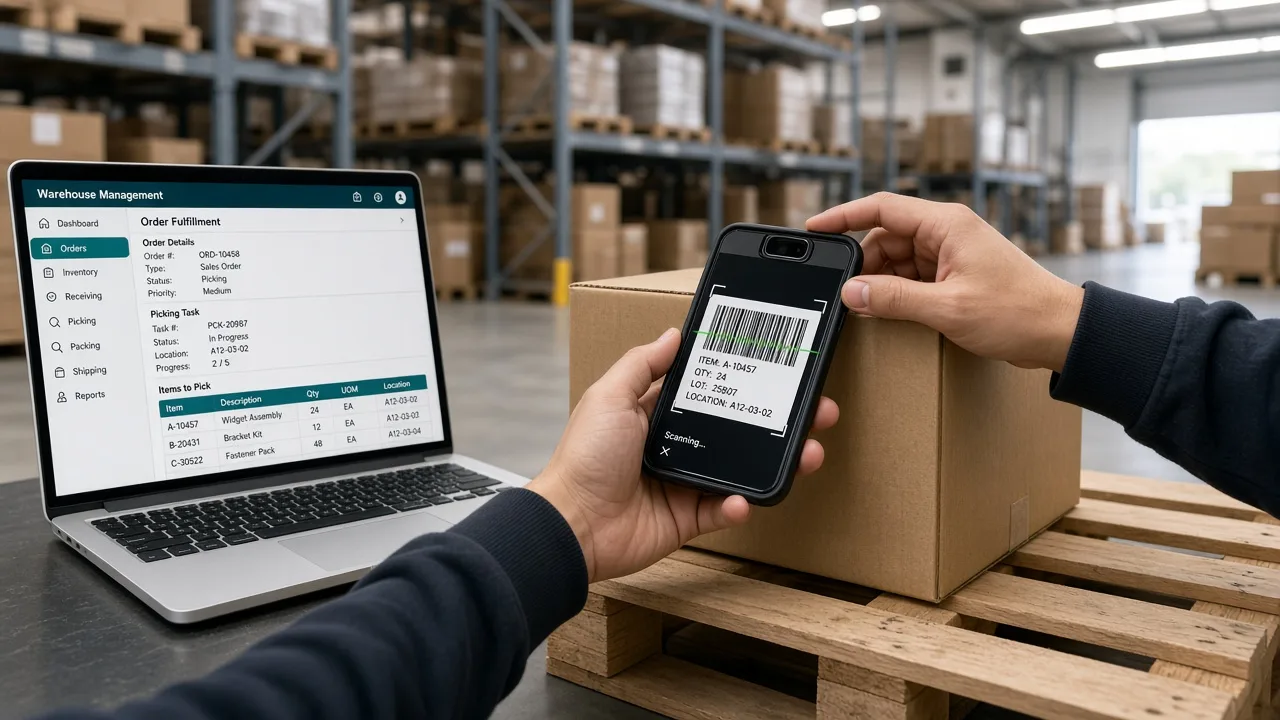
Warehouse operations are becoming increasingly digital as businesses look for faster inventory movement, accurate order fulfilment, and better visibility across their supply chains. Manual spreadsheets, paper-based records, and disconnected systems can make it difficult to track stock, manage orders, coordinate employees, and respond to changing customer demand.
This is where warehouse management app development becomes valuable. A modern warehouse application can connect inventory, receiving, picking, packing, shipping, employees, suppliers, and administrators through one centralized platform.
Beyond basic inventory tracking, today's warehouse solutions can incorporate barcode scanning, RFID, real-time notifications, GPS tracking, automated workflows, analytics, and AI-powered forecasting. These capabilities help businesses reduce errors, improve warehouse productivity, and make better operational decisions.
Whether you're managing a single warehouse or a large multi-location distribution network, choosing the right technology partner is essential. In this guide, we've highlighted the top warehouse management app development companies in the USA based on their technical expertise, logistics capabilities, scalability, innovation, and ability to build customized warehouse solutions.
Why Modern Warehouses Are Adopting Digital Management Solutions
Warehouse operations have become more complex as businesses handle larger inventories, faster order volumes, multiple sales channels, and increasingly demanding delivery schedules. Digital warehouse management helps organizations replace manual coordination with connected workflows and real-time information.
Real-Time Inventory Visibility
Digital platforms provide an up-to-date view of stock levels, locations, incoming goods, reserved inventory, and available products. This reduces uncertainty and helps prevent stockouts or overstocking.
Faster Order Fulfilment
Automated picking, packing, and shipping workflows help warehouse teams process orders more efficiently. Employees can access order information instantly instead of relying on paperwork or manual communication.
Fewer Inventory Errors
Barcode scanning, RFID, and digital stock records reduce manual data-entry errors. Accurate inventory information also makes reconciliation and auditing easier.
Better Workforce Management
Warehouse managers can assign tasks, monitor employee productivity, manage shifts, and track workload from a centralized dashboard.
Improved Supply Chain Coordination
A connected warehouse platform can integrate with suppliers, transportation providers, eCommerce systems, ERP platforms, and logistics tools, creating better visibility across the supply chain.
Warehouse Automation
Modern platforms can automate repetitive workflows such as stock alerts, purchase requests, order assignments, notifications, and shipment updates. Businesses exploring on-demand app development companies in the USA can also evaluate their ability to build real-time operational platforms that connect warehouse activities with delivery and logistics workflows.
Data-Driven Decision Making
Analytics can help businesses identify inventory trends, order volumes, fulfilment performance, warehouse productivity, and operational bottlenecks.
For growing businesses, investing in mobile app development companies in the USA can also provide warehouse staff and managers with mobile access to inventory, tasks, scanning, and operational updates from anywhere within the facility.
What Features Should a Modern Warehouse Management App Include?
A modern warehouse management application should do more than record inventory. It should connect the entire warehouse workflow, from receiving goods and storing products to picking, packing, shipping, and reporting, within one centralized system.
Inventory Management
The platform should provide real-time visibility into stock quantities, warehouse locations, product movements, reserved inventory, and reorder levels. Automated stock alerts can help businesses prevent shortages and improve inventory accuracy.
Barcode & QR Code Scanning
Mobile scanning allows warehouse employees to quickly identify products, update stock records, verify orders, and reduce manual data entry. QR and barcode functionality is especially useful for high-volume warehouse environments.
Order Management
Warehouse teams should be able to view incoming orders, prioritize fulfillment, assign picking tasks, and track orders through different stages of processing.
Receiving & Putaway
The application can help employees record incoming shipments, verify quantities, inspect products, and assign appropriate storage locations, creating a more organized receiving process.
Picking & Packing
Digital picking lists and task assignments help employees locate products quickly and prepare orders accurately. Packing workflows can also include product verification and shipment documentation.
Shipping & Dispatch
Warehouse managers can coordinate shipments, generate shipping information, track dispatch status, and connect warehouse activities with logistics providers.
Employee Management
A dedicated workforce module allows managers to assign tasks, monitor productivity, manage shifts, and track employee performance from a centralized dashboard.
Notifications & Alerts
Real-time notifications can inform employees and managers about low inventory, delayed orders, incoming shipments, task assignments, and other important warehouse events.
Businesses requiring highly customized workflows can work with a custom software development company to integrate warehouse operations with ERP, CRM, eCommerce, accounting, and logistics systems while supporting future expansion.
Top Warehouse Management App Development Companies in the USA
Choosing the right development partner depends on the size of the warehouse operation, required integrations, level of automation, and future growth plans. The following companies offer different strengths across mobile development, cloud infrastructure, enterprise software, AI, and custom logistics solutions.
Businesses looking for mobile app development in the USA can benefit from development partners with experience in warehouse automation, inventory management, real-time tracking, and logistics integrations.
1. Techanic Infotech
Techanic Infotech develops customized software and mobile applications for businesses looking to digitize and automate operational workflows. Its capabilities can support warehouse platforms with inventory tracking, employee management, barcode scanning, analytics, and real-time operational dashboards.
Warehouse Management Strengths
- Custom warehouse management applications
- Inventory and order management
- Mobile applications for warehouse staff
- Barcode and scanning integrations
- AI-powered analytics and automation
Best For: Startups and enterprises looking for customized warehouse and inventory management solutions.

Partner with Techanic Infotech to build a custom warehouse management app with inventory tracking, scanning, and dashboards.
Get Free Quote2. CrinPro Solutions
CrinPro Solutions focuses on scalable mobile and cloud-based applications for businesses modernizing their operations. Its development capabilities can support warehouse workflows involving inventory, orders, workforce coordination, notifications, and reporting.
Warehouse Management Strengths
- Inventory management platforms
- Mobile and web applications
- Cloud-based systems
- Custom backend development
- Real-time operational dashboards
Best For: Small and mid-sized businesses building flexible warehouse management platforms.
3. Simform
Simform specializes in cloud engineering and scalable software development. Its capabilities are suitable for warehouse operations that require high-performance infrastructure, system integrations, and enterprise-level scalability.
Warehouse Management Strengths
- Cloud-native development
- Enterprise software engineering
- API integrations
- Data and analytics
- Scalable backend systems
Best For: Large warehouses and businesses managing complex, high-volume operations.
4. ScienceSoft
ScienceSoft provides enterprise software development and IT consulting services. Its expertise can support organizations building warehouse platforms that integrate with ERP systems, supply chain tools, analytics platforms, and other business infrastructure.
Warehouse Management Strengths
- Enterprise warehouse software
- ERP and third-party integrations
- Cloud infrastructure
- Analytics and reporting
- Business process automation
Best For: Enterprises requiring secure and integrated warehouse management systems.
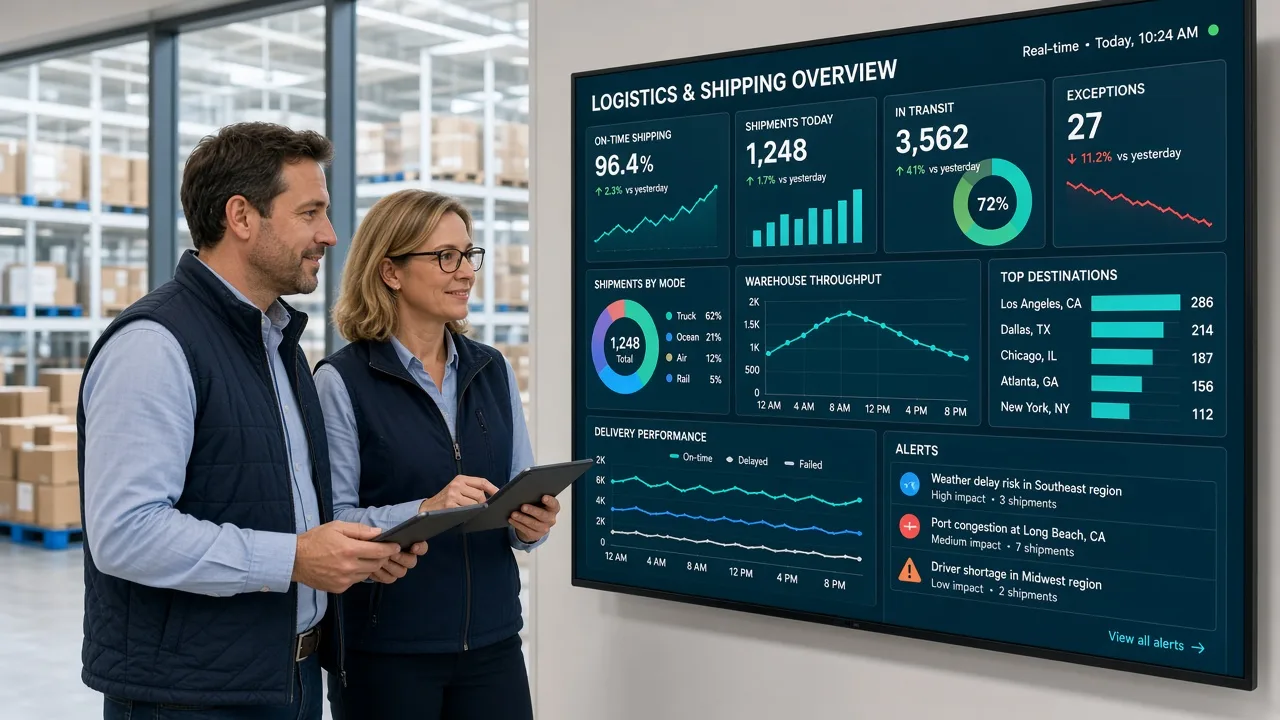
Ready to launch a warehouse platform with barcode scanning, order fulfillment, and ERP integrations? Get a scoped plan and timeline.
Get Free Quote5. Intellectsoft
Intellectsoft focuses on enterprise software development and digital transformation. Its capabilities can support large organizations building connected systems across warehouses, supply chains, logistics operations, and business departments.
Warehouse Management Strengths
- Enterprise application development
- Cloud-based platforms
- System integration
- AI-enabled solutions
- Digital transformation
Best For: Multi-location businesses and enterprise supply chain operations.
6. Zazz
Zazz provides custom software and mobile app development services for businesses across different industries. Its capabilities can support warehouse applications requiring mobile workflows, real-time data, integrations, and customized dashboards.
Zazz's experience in mobile and digital product development makes it an option for businesses comparing mobile app development companies in the USA for warehouse management and logistics applications.
Warehouse Management Strengths
- Custom mobile app development
- Inventory management solutions
- Web and mobile dashboards
- API integrations
- Cloud-based applications
- UI/UX design
Best For: Businesses looking for customized warehouse applications with modern mobile and web experiences.
7. TechAhead
TechAhead specializes in mobile and digital product development, with capabilities across cloud, AI, IoT, and connected applications. These technologies can support warehouse platforms that require real-time tracking, automation, analytics, and scalable infrastructure.
Warehouse Management Strengths
- Mobile warehouse applications
- Cloud solutions
- IoT development
- AI and analytics
- Backend development
- Application modernization
Best For: Businesses planning technology-driven warehouse platforms with advanced capabilities.
8. Net Solutions
Net Solutions provides digital product development and software engineering services for businesses building customized technology platforms. Its expertise can support warehouse applications with mobile interfaces, backend systems, integrations, and data-driven functionality.
Warehouse Management Strengths
- Custom software development
- Mobile applications
- Digital product engineering
- Cloud solutions
- API integrations
- Data and analytics
Best For: Established businesses looking for end-to-end digital product development.

Build a scalable warehouse management system with picking, shipping, and multi-location support — get a free estimate.
Get Free Quote9. MindInventory
MindInventory offers mobile and software development services for startups, SMBs, and enterprises. Its capabilities can help businesses build warehouse applications that connect inventory, orders, workforce management, analytics, and administrative functions.
Warehouse Management Strengths
- Warehouse management applications
- Mobile and web development
- Custom software solutions
- AI and automation
- Cloud development
- Analytics and reporting
Best For: Businesses seeking customized warehouse and inventory management platforms.
10. Cleveroad
Cleveroad provides custom software and mobile application development services for businesses with complex digital requirements. Its expertise across backend development, cloud solutions, integrations, and enterprise software can support sophisticated warehouse management platforms.
Warehouse Management Strengths
- Custom warehouse software
- Mobile application development
- Enterprise software solutions
- API and system integrations
- Cloud development
- Business intelligence
Best For: Mid-sized and enterprise businesses requiring scalable warehouse management solutions.
How to Choose the Right Warehouse Management App Development Company
Selecting the right warehouse management app development company can influence the application's quality, scalability, security, and long-term success.
Check Relevant Experience
Look for a company with experience in warehouse management, logistics, inventory, supply chain, or other operational applications.
Review the Portfolio
Examine previous projects to evaluate the company's technical capabilities, UI/UX quality, integrations, and experience with real-time applications.
Evaluate Technical Expertise
The development team should understand mobile and web development, cloud infrastructure, databases, APIs, barcode scanning, GPS, IoT, analytics, and security.
Consider Integration Capabilities
Ask whether the company can integrate the application with ERP, CRM, eCommerce, accounting, inventory, payment, and logistics systems.
Discuss Scalability
The platform should be capable of supporting additional warehouses, users, products, orders, integrations, and advanced features as the business grows.
Check Post-Launch Support
Review the company's approach to bug fixes, security updates, performance optimization, API maintenance, and future feature development.
Compare Cost and Timeline
Request a detailed proposal covering project scope, development milestones, estimated timeline, deliverables, and ongoing maintenance costs, and compare it with the mobile app development cost in the USA to establish a realistic budget.
A reliable development partner should combine technical expertise with an understanding of warehouse operations to build a secure, scalable, and efficient platform.
Conclusion
Digital warehouse management can help businesses improve inventory visibility, streamline fulfillment, reduce operational errors, and coordinate warehouse activities more efficiently. A well-designed application can connect inventory, employees, orders, shipping, analytics, and other operational workflows through a centralized platform.
The right solution should be built around the organisation's current requirements while remaining flexible enough to support future growth. Businesses should prioritize essential functionality, choose suitable technologies, plan integrations carefully, and select a development partner with relevant technical and industry experience.
Frequently Asked Questions (FAQs)
1. What is a warehouse management app?
It is a digital platform for managing inventory, orders, employees, and warehouse operations.
2. What features should a warehouse management app include?
Inventory tracking, barcode scanning, order management, picking, shipping, analytics, and notifications are common features.
3. Can a warehouse app integrate with ERP systems?
Yes, it can connect with ERP, CRM, eCommerce, and logistics systems through APIs.
4. Can warehouse apps manage multiple locations?
Yes, scalable platforms can manage inventory and operations across multiple warehouses.
5. Does a warehouse management app support barcode scanning?
Yes, barcode and QR scanning can help identify products and update inventory quickly.
6. Can AI be used in warehouse management apps?
Yes, AI can support demand forecasting, inventory optimization, automation, and predictive analytics.
7. How long does it take to develop a warehouse management app?
The timeline depends on features, integrations, platforms, and customization requirements.