
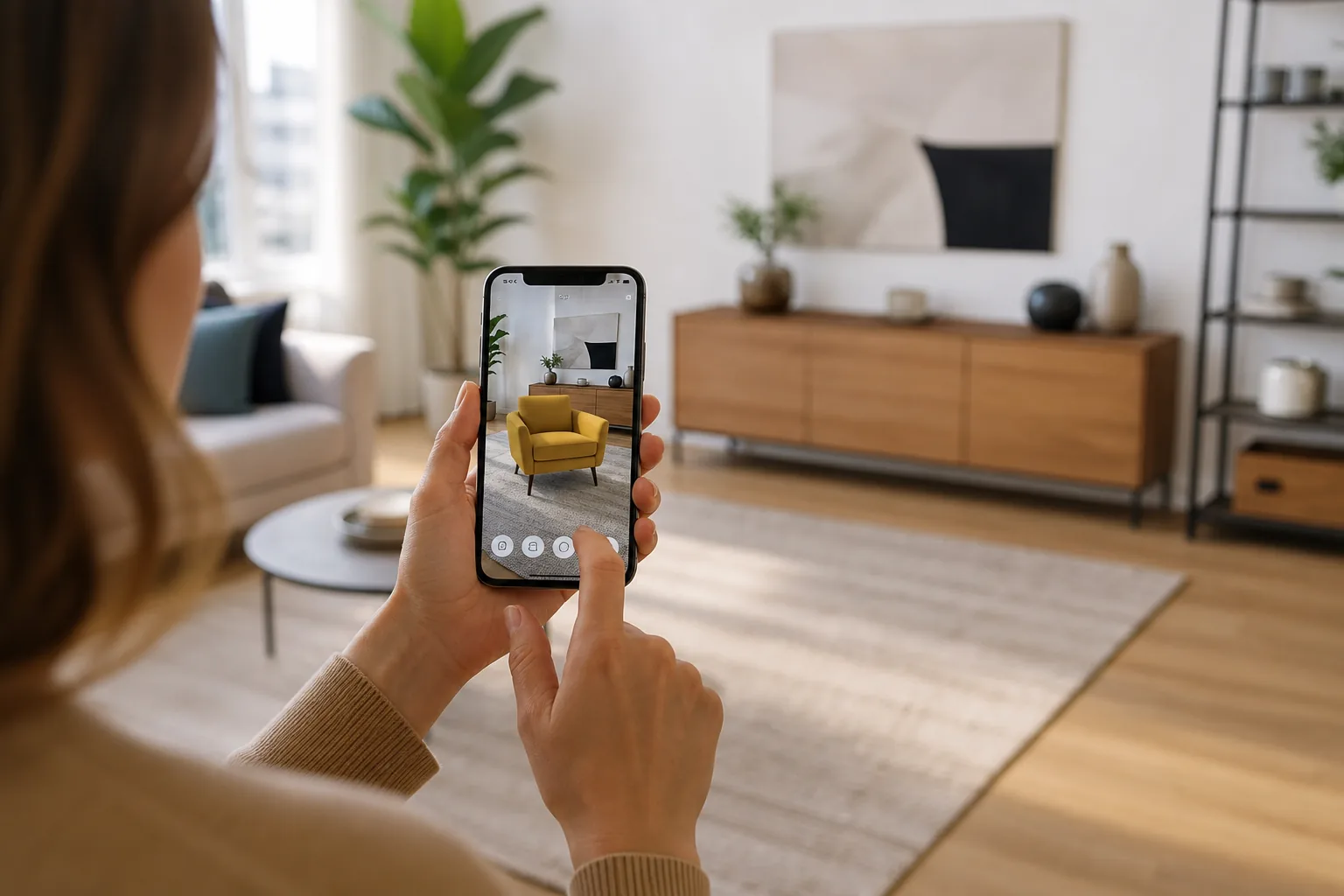
Augmented reality is moving beyond entertainment and becoming a practical technology for businesses across retail, healthcare, education, manufacturing, real estate, gaming, and marketing. By combining digital content with the physical environment, AR applications can create interactive experiences that improve engagement, visualisation, training, and customer decision-making.
Businesses are increasingly exploring AR to let customers visualise products before purchasing, help technicians access real-time instructions, provide immersive learning experiences, and create interactive marketing campaigns. As these use cases expand, choosing a development partner with the right combination of AR expertise, mobile engineering, 3D capabilities, and backend experience becomes increasingly important.
A successful AR application requires more than attractive visual effects. Developers need to consider device compatibility, camera and sensor integration, 3D assets, spatial mapping, performance, user experience, and data security. The right technology partner can help transform an AR concept into a reliable product that works across supported devices and can scale with future business requirements.
In this guide, we've highlighted some of the best augmented reality app development companies in the USA, focusing on their technical capabilities, product development experience, AR expertise, and suitability for different types of immersive applications.
Why Businesses Are Investing in AR App Development
AR gives businesses a way to make digital experiences more interactive and context-aware. Instead of asking customers or employees to interpret information separately, AR can place relevant digital content directly into their physical environment.
Product Visualization
Retail and eCommerce businesses can use AR to allow customers to preview furniture, clothing, accessories, vehicles, or other products in real-world settings before making purchasing decisions.
Interactive Training
Manufacturing, healthcare, aviation, and other industries can use AR-based training to demonstrate procedures, equipment operation, maintenance processes, and technical instructions in an immersive environment.
Enhanced Customer Engagement
AR experiences can make marketing campaigns, product launches, events, and brand experiences more interactive, helping businesses create memorable customer interactions.
Better Field Operations
Technicians can use AR applications to access equipment information, visual instructions, maintenance guidance, and remote assistance while working on-site.
Growing Mobile Opportunities
Businesses developing immersive experiences often work with experienced mobile app development companies in the USA to combine AR frameworks with reliable mobile interfaces, cloud services, analytics, and backend systems.
As AR adoption grows, organisations also need to consider platform compatibility, device support, development complexity, and long-term maintenance before selecting their technology strategy.
Best Augmented Reality App Development Companies in the USA
Explore leading AR app development companies in the USA that specialise in immersive mobile experiences, 3D applications, ARKit, ARCore, computer vision, and custom augmented reality solutions for businesses across industries.
1. Techanic Infotech
Techanic Infotech develops customised mobile and digital solutions for startups and enterprises. Its broad product engineering capabilities make it suitable for businesses looking to turn AR concepts into practical customer-facing or enterprise applications.
AR Capabilities
- AR-enabled mobile applications
- Interactive product experiences
- 3D and immersive interfaces
- AI-integrated applications
- Cloud and API integration
Ideal Project: Retail visualisation, interactive marketing, product discovery, and enterprise AR applications.

Partner with Techanic Infotech to build a custom AR, immersive product, or 3D visualisation platform.
Get Free Quote2. CrinPro Solutions
CrinPro Solutions focuses on customised mobile and cloud-based applications for growing businesses. Its development approach can support AR products that combine immersive interfaces with booking, customer management, and backend functionality.
AR Capabilities
- Custom mobile applications
- AR-integrated user experiences
- Cloud-connected platforms
- Backend and API development
- Cross-platform solutions
Ideal Project: Beauty, retail, education, and service applications incorporating AR experiences.
3. Blue Label Labs
Blue Label Labs is a digital product development company focused on creating mobile applications and consumer-facing digital experiences. Its product strategy and design capabilities can support AR applications where visual interaction and usability are important.
AR Capabilities
- AR-enabled mobile experiences
- Product strategy
- UI/UX design
- iOS and Android development
- Emerging technology integration
Ideal Project: Retail, marketing, entertainment, and consumer AR applications.
4. Dogtown Media
Dogtown Media develops custom mobile applications and connected digital products, with experience across emerging technologies and complex mobile solutions.
AR Capabilities
- Augmented reality applications
- Computer vision
- Location-based experiences
- Mobile development
- IoT and emerging technologies
Ideal Project: AR applications combining mobile technology with location, computer vision, or connected-device functionality.

Ready to launch an AR app with product visualisation, 3D experiences, and mobile performance? Get a scoped plan and timeline.
Get Free Quote5. ArcTouch
ArcTouch is a digital product development company known for combining product strategy, UX design, and mobile engineering. Its experience in mobile app development in the USA makes it a suitable partner for businesses focused on creating polished AR experiences that combine immersive technology with intuitive mobile interfaces.
AR Capabilities
- Immersive mobile experiences
- Product strategy
- UX/UI design
- Connected applications
- Mobile and cloud development
Ideal Project: Consumer AR products where usability, design, and engagement are central to the experience.
6. OpenXcell
OpenXcell provides custom mobile and software development services for startups, SMBs, and enterprises. Its broad technology capabilities can support AR applications requiring backend systems, APIs, cloud infrastructure, and customised business workflows.
AR Capabilities
- AR application development
- Mobile and web solutions
- 3D-enabled experiences
- AI and cloud integration
- Custom software engineering
Ideal Project: Retail, real estate, education, and enterprise applications using AR for visualisation or interaction.
7. MobiDev
MobiDev specialises in custom software and product engineering, making it suitable for AR projects that require specialised integrations and technically complex functionality.
AR Capabilities
- Custom immersive applications
- Mobile development
- API integrations
- Backend engineering
- Computer vision and connected technologies
Ideal Project: Businesses developing technically advanced AR applications with specialised workflows or integrations.
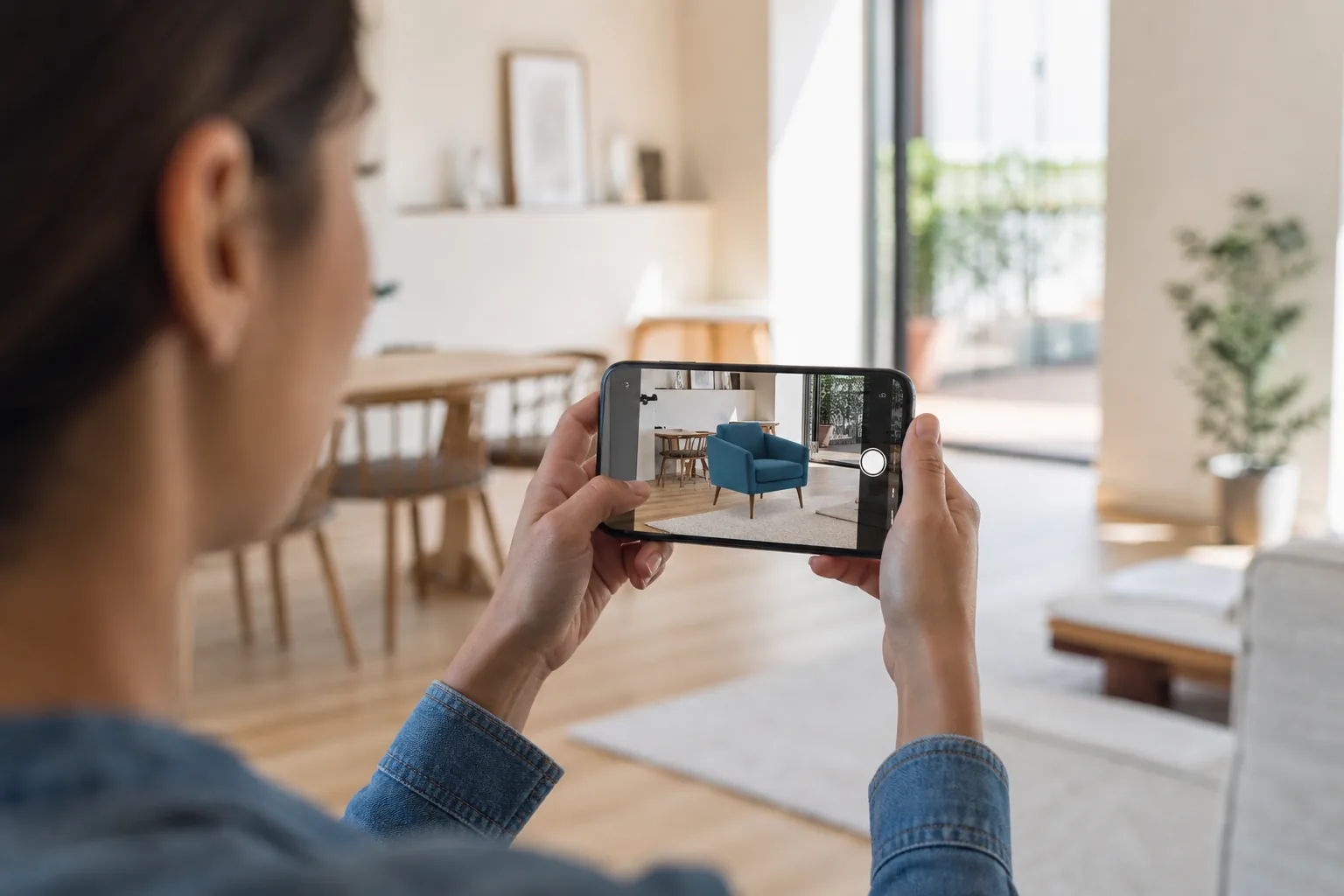
Build an AR experience with ARKit/ARCore, 3D assets, and immersive mobile UX — get a free estimate.
Get Free Quote8. Intellectsoft
Intellectsoft provides enterprise software development and digital transformation services for organisations building advanced technology platforms. Its broader emerging-technology expertise can support AR solutions integrated into enterprise environments.
AR Capabilities
- Enterprise AR solutions
- Immersive digital experiences
- Cloud integration
- AI and emerging technologies
- Enterprise software development
Ideal Project: Large organisations exploring AR for training, manufacturing, healthcare, visualisation, or enterprise operations.
9. Zazz
Zazz is a digital product development company specialising in mobile and web applications for startups and enterprises. Its product engineering capabilities can support AR applications requiring polished interfaces and scalable backend systems.
AR Capabilities
- AR mobile applications
- 3D-enabled experiences
- Mobile product development
- UI/UX design
- Cloud and backend integration
Ideal Project: Consumer applications, retail experiences, real estate visualisation, and branded AR solutions.
10. TreeView
TreeView is a software development company focused on building customised digital products and enterprise applications. Its engineering capabilities can support businesses exploring immersive technologies alongside conventional mobile and web systems.
AR Capabilities
- Custom AR applications
- Mobile development
- Enterprise software
- Cloud integration
- Interactive digital experiences
Ideal Project: Businesses looking to incorporate AR into existing enterprise applications or build customised immersive products.
11. ELEKS
ELEKS is an established software engineering and technology consulting company with expertise in enterprise software, cloud technologies, AI, and emerging digital solutions.
AR Capabilities
- AR and immersive technology solutions
- Computer vision
- AI integration
- Cloud and enterprise platforms
- Custom software engineering
Ideal Project: Enterprise AR projects involving complex integrations, industrial applications, healthcare, training, and large-scale digital transformation.
Key AR Technologies, Platforms & Industry Expertise to Consider
Choosing an AR development partner requires looking beyond basic app development. The company should understand the technical requirements of augmented reality and how those capabilities translate into practical business applications.
AR Platform Expertise
Check whether the development team has experience with technologies such as ARKit for iOS, ARCore for Android, Unity, Unreal Engine, or WebAR. The right platform depends on the devices, audience, and type of AR experience being developed.
3D & Computer Vision Capabilities
Advanced AR applications often require 3D models, object recognition, image tracking, spatial mapping, or computer vision. These capabilities become particularly important for product visualisation, industrial applications, healthcare, and training solutions.
Mobile Performance
AR applications rely heavily on cameras, sensors, graphics processing, and device hardware. Businesses comparing mobile app development should evaluate providers' ability to maintain smooth performance across supported devices.
Industry Experience
AR requirements vary significantly by industry. Retail may prioritise virtual try-ons, and real estate may focus on property visualisation, while manufacturing may require AR-assisted maintenance or training.
A development partner with relevant industry experience can better understand these requirements and translate them into practical AR workflows.
Scalability & Customization
Businesses with specialised requirements may need more than an off-the-shelf AR solution. A custom software development company can create tailored applications that connect AR functionality with existing business systems, databases, APIs, and operational workflows.
Budget & Long-Term Support
AR development can involve additional costs for 3D assets, device testing, specialised engineering, cloud infrastructure, and ongoing optimisation. Businesses should evaluate the mobile app development cost in the USA together with maintenance and future enhancement requirements rather than considering only the initial development quotation.
What to Consider Before Hiring an AR Development Company
Before selecting a development partner, businesses should evaluate how well the company can handle the technical and commercial requirements of the planned AR product.
Start With the AR Use Case
Clearly define what the application needs to accomplish. Virtual try-ons, product visualisation, navigation, training, gaming, and industrial assistance all require different approaches and technologies.
Check Device Compatibility
AR performance varies across smartphones, tablets, smart glasses, and other supported hardware. Confirm that the development team can build and test the application across the devices your target audience will use.
Evaluate Integration Requirements
An AR application may need to connect with eCommerce platforms, CRM systems, IoT devices, payment services, analytics tools, or existing enterprise software. Strong integration capabilities can prevent technical limitations later.
Consider the Development Model
Some projects may begin with a focused MVP, while others require a complete enterprise solution from the start. Businesses should choose a development approach that matches their budget, timeline, and product roadmap.
For businesses comparing on-demand app development companies in the USA, experience with real-time applications, location-based features, APIs, and scalable backend systems can also be valuable when AR is part of a broader service platform.
Don't Ignore Post-Launch Support
AR applications require continuous testing and optimisation as mobile operating systems, devices, AR frameworks, and hardware capabilities evolve. Ask potential partners about maintenance, performance monitoring, updates, and future feature development before signing a project agreement.
Conclusion
Choosing the right AR development company is ultimately about finding a partner that can turn an immersive concept into a reliable business solution. The strongest teams combine AR expertise with mobile engineering, 3D development, cloud infrastructure, user experience, and long-term technical support.
Whether you're building a virtual try-on experience, an interactive retail application, an AR training platform, or an enterprise solution, evaluate potential partners based on their technical capabilities, relevant industry experience, device compatibility, scalability, and ability to support the product after launch.
A well-planned AR application can create more engaging customer experiences, improve business processes, and open new opportunities for digital products across multiple industries.
Frequently Asked Questions (FAQs)
1. Which are the best AR app development companies in the USA?
Techanic Infotech and CrinPro Solutions are among the companies worth considering for AR application development.
2. What industries can benefit from AR applications?
Retail, healthcare, education, manufacturing, real estate, automotive, gaming, tourism, marketing, and entertainment can all benefit from augmented reality applications.
3. What technologies are used to develop AR apps?
Common technologies include ARKit, ARCore, Unity, Unreal Engine, computer vision frameworks, 3D modelling tools, and cloud services.
4. How much does AR app development cost?
AR development costs depend on the application's complexity, supported devices, 3D requirements, integrations, AI capabilities, and development scope.
5. Can AR apps work on both Android and iOS?
Yes. AR applications can be developed for both platforms using technologies such as ARCore and ARKit, while cross-platform frameworks and game engines can support shared development approaches.
6. Can AI be integrated into an AR application?
Yes. AI can support object recognition, image analysis, personalised recommendations, voice interaction, intelligent visualisation, and automated content generation.
7. Do AR apps require 3D models?
Not always, but many AR experiences benefit from 3D assets. Product visualisation, virtual try-ons, architectural visualisation, and interactive training applications commonly rely on 3D models.
8. How long does it take to develop an AR app?
The timeline depends on the scope and complexity. A basic AR experience can take a few months, while advanced applications involving 3D content, AI, multiple platforms, and enterprise integrations can require considerably more time.