
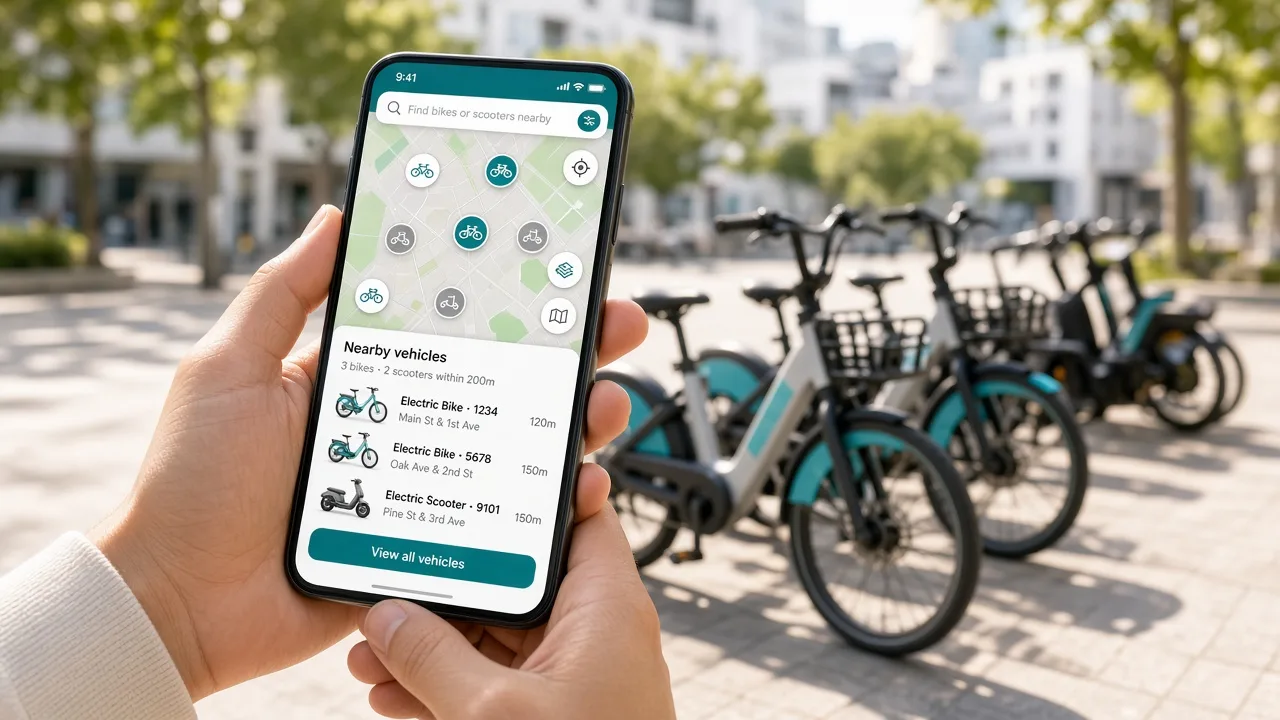
Urban transportation is changing rapidly as cities look for convenient, affordable, and flexible alternatives to traditional mobility. Electric scooters, shared bicycles, e-bikes, and other lightweight transportation options have become increasingly important within modern urban mobility ecosystems.
Behind these services are sophisticated mobile applications that allow users to locate nearby vehicles, unlock rides, make payments, track trip activity, and manage their accounts from a smartphone. Operators also rely on technology to monitor fleets, manage vehicles, optimize availability, and analyze rider behavior.
This has created growing demand for micromobility app development solutions that combine GPS tracking, real-time fleet management, digital payments, geolocation, IoT connectivity, and intuitive user experiences.
Choosing the right technology partner is therefore an important part of launching a successful micromobility platform. In this guide, we've highlighted some of the top micromobility app development companies in the USA based on their mobile engineering capabilities, product development experience, mobility expertise, scalability, and ability to build customized transportation solutions.
Why Micromobility Businesses Are Investing in Mobile Apps
Micromobility services depend heavily on digital technology because almost every stage of the customer journey happens through an application.
Convenient Vehicle Discovery
Users can open an app, identify nearby scooters or bicycles, check availability, and reserve a vehicle without visiting a physical location.
Contactless Vehicle Unlocking
QR codes, Bluetooth, NFC, and connected vehicle technologies allow riders to unlock vehicles directly from their smartphones, creating a faster rental experience.
Real-Time Fleet Management
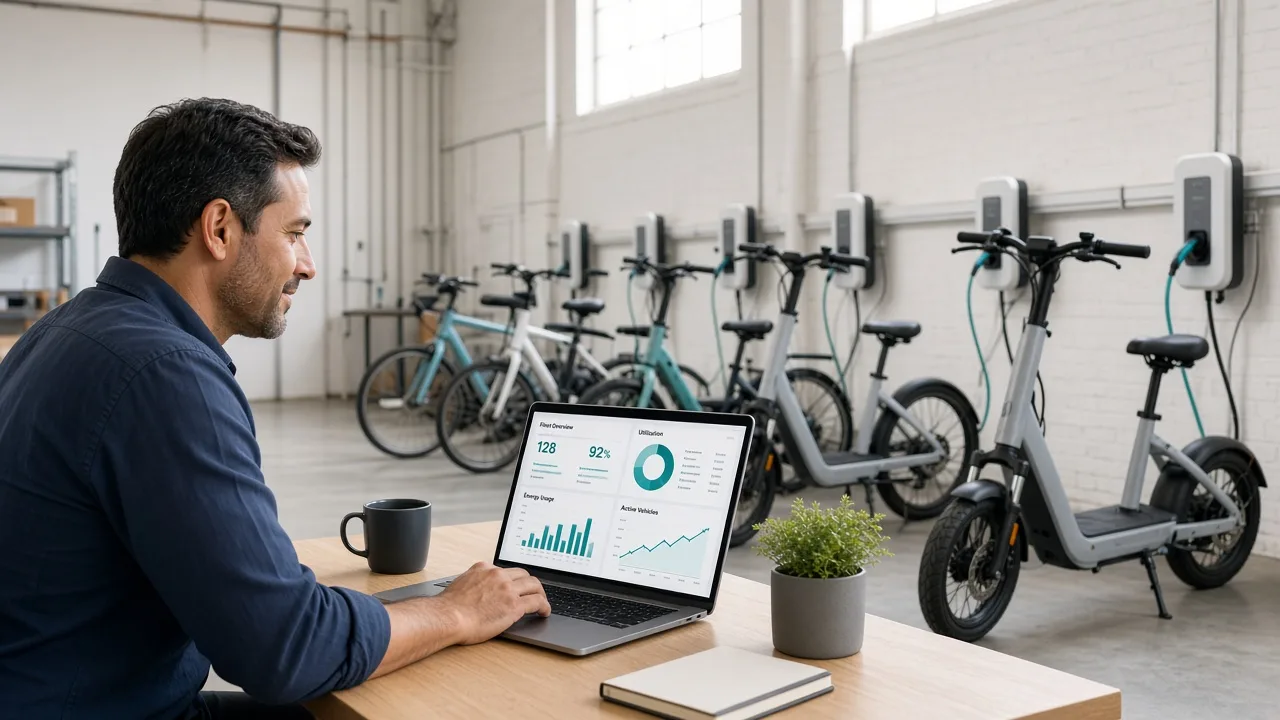
Operators can monitor vehicle locations, battery levels, availability, maintenance requirements, and trip activity through centralized dashboards.
Digital Payments
Integrated payment systems allow customers to pay for rides, purchase passes, manage subscriptions, and receive digital receipts through the application.
Better Urban Mobility
Micromobility applications can integrate maps, geolocation, route planning, parking zones, and ride information to create a more connected transportation experience.
Businesses evaluating on-demand app development companies in the USA can also benefit from their experience with location-based services, real-time bookings, digital payments, and driver or fleet management systems.
What a Modern Micromobility Platform Should Handle for Users and Operators
A micromobility application is more than a booking interface. It acts as the digital layer connecting riders with vehicles, payments, fleet operations, maintenance teams, and administrators.
The strongest platforms typically combine several interconnected capabilities.
Rider Experience
The customer-facing application should make every stage of a ride simple, from discovering a nearby vehicle to completing the trip.
Core capabilities include:
- Account registration and secure login
- Interactive vehicle maps
- Scooter, bike, and e-bike discovery
- Vehicle availability and pricing
- QR code scanning and digital unlocking
- Ride reservations
- Real-time trip tracking
- Digital payments
- Ride history and receipts
- Ratings and customer support
Fleet Management
Operators need a separate management system to understand what is happening across the fleet.
A fleet dashboard can monitor:
- Vehicle location
- Battery levels
- Current ride status
- Vehicle availability
- Maintenance requirements
- Charging status
- Service history
- Fleet utilization
This centralized visibility helps operators identify vehicles that require charging, maintenance, relocation, or inspection.
Geolocation & Navigation
Location technology is fundamental to micromobility. GPS and mapping services help users locate vehicles while enabling operators to monitor fleet movement and define operational zones.
Geofencing can also be used to identify areas where vehicles can be parked, picked up, or operated according to business rules.
Businesses that also evaluate Taxi Booking App Development Companies can benefit from comparing their experience with GPS tracking, driver or vehicle management, route-based services, and real-time mobility workflows.
Payments & Pricing
The platform should support secure digital payments while allowing businesses to configure different pricing models.
Depending on the business model, this can include:
- Pay-per-minute pricing
- Unlock fees
- Distance-based pricing
- Subscription plans
- Ride passes
- Promotional discounts
- Corporate accounts
- Automated invoices
Admin & Operations Dashboard
Administrators need centralized control over users, vehicles, payments, service areas, pricing, promotions, support requests, and operational analytics.
Top Micromobility App Development Companies in the USA for Businesses
The companies below bring different strengths to mobility technology, including mobile product development, fleet management, IoT, cloud infrastructure, and real-time transportation platforms. The right fit depends on the type of micromobility product, fleet size, integrations, and expected scale.
1. Techanic Infotech
Techanic Infotech develops customized mobile and software solutions for businesses looking to build scalable digital products.
Key Capabilities
- Micromobility application development
- Ride booking and management
- GPS and location-based features
- Fleet management
- Payment integration
- Custom admin dashboards
Best For: Startups and mobility businesses seeking customized scooter, bike-sharing, or e-bike platforms.

Partner with Techanic Infotech to build a custom scooter, bike-sharing, or e-bike platform with GPS, payments, and fleet tools.
Get Free Quote2. CrinPro Solutions
CrinPro Solutions focuses on scalable mobile and cloud-based applications for businesses that need customized digital platforms.
Key Capabilities
- Mobility app development
- Booking and reservation systems
- Real-time tracking
- Payment integration
- Cloud-based backend systems
- Fleet management dashboards
Best For: Growing micromobility businesses and mobility startups.
3. ArcTouch
ArcTouch specializes in digital product strategy and mobile application development, with experience creating connected customer experiences.
Key Capabilities
- Mobile product development
- Connected device applications
- IoT integration
- UX/UI design
- Cloud-connected platforms
- Cross-platform development
Best For: Consumer-facing micromobility products that prioritize mobile experience and connected vehicles.
4. MobiDev
MobiDev provides custom software engineering for businesses with complex product and integration requirements.
Key Capabilities
- Custom mobility applications
- IoT and device integrations
- Real-time data processing
- Backend engineering
- Cloud infrastructure
- Custom APIs
Best For: Micromobility companies requiring complex vehicle, IoT, or backend integrations.
5. Surf
Surf combines product strategy, UX design, and engineering to build mobile and digital products for startups and growing businesses.
Key Capabilities
- Mobile application development
- Product discovery
- UX/UI design
- Cross-platform development
- Backend engineering
- Product optimization
Best For: Mobility startups focused on user experience and rapid product development.
Ready to launch a shared scooter or e-bike app with QR unlock, GPS, and digital payments? Get a scoped plan and timeline.
Get Free Quote6. Simform
Simform provides software engineering and cloud development services for businesses building scalable digital platforms.
Key Capabilities
- Cloud-native application development
- Fleet management systems
- Real-time data platforms
- Mobile applications
- IoT integration
- Backend engineering
Best For: Growing and enterprise mobility platforms requiring scalable cloud infrastructure.
7. ScienceSoft
ScienceSoft provides enterprise software development and IT consulting services for organizations building complex digital platforms.
Key Capabilities
- Mobility software development
- IoT integration
- Fleet management
- Cloud infrastructure
- Data analytics
- Enterprise system integration
Best For: Large mobility operators and businesses requiring secure, scalable platforms with complex integrations.
8. Intellectsoft
Intellectsoft develops enterprise applications and digital transformation solutions with expertise in cloud technologies, mobile development, and connected systems.
Key Capabilities
- Mobile mobility platforms
- IoT solutions
- Cloud-native development
- Real-time applications
- Enterprise integrations
- AI and analytics
Best For: Enterprise micromobility businesses managing large fleets and multiple operational systems.
9. OpenXcell
OpenXcell offers customized mobile and software development services for startups, SMBs, and enterprises.
Key Capabilities
- Micromobility app development
- Ride booking systems
- GPS integration
- Payment gateways
- Fleet management
- AI-enabled solutions
Best For: Businesses looking for customizable mobility applications with multiple user roles and operational features.

Build a scalable micromobility platform with fleet tracking, geofencing, and multi-city support — get a free estimate.
Get Free Quote10. Zco Corporation
Zco Corporation develops custom mobile and enterprise software for businesses with complex application requirements.
Key Capabilities
- Mobile application development
- Custom mobility software
- Backend engineering
- Enterprise applications
- Cloud solutions
- IoT integrations
Best For: Established mobility companies requiring highly customized applications and long-term technical support.
11. TechAhead
TechAhead specializes in mobile application development, cloud solutions, and emerging technologies such as AI and IoT.
Key Capabilities
- Mobility applications
- AI-powered features
- IoT integration
- Fleet management
- Cloud infrastructure
- Analytics
Best For: Technology-driven micromobility businesses exploring intelligent fleet operations and personalized rider experiences.
12. Net Solutions
Net Solutions provides digital product engineering and custom software development for startups and enterprises.
Key Capabilities
- Mobile mobility applications
- Product engineering
- Cloud development
- API integrations
- UX/UI design
- Enterprise software
Best For: Micromobility businesses seeking scalable platforms that can evolve with their operations.
Key Factors for Comparing Micromobility Development Partners
Each development company brings a different combination of mobile engineering, cloud infrastructure, IoT, fleet management, and product strategy. The right partner depends on the type of mobility service you're building and the complexity of your operational requirements.
- Techanic Infotech — Custom mobility development. Best for startups and enterprises. Focus: booking, fleet, and payments.
- CrinPro Solutions — Scalable mobile platforms. Best for growing mobility businesses. Focus: tracking and cloud systems.
- ArcTouch — Connected product experiences. Best for consumer mobility brands. Focus: IoT and mobile UX.
- MobiDev — Custom engineering. Best for complex mobility products. Focus: IoT and backend systems.
- Surf — Product strategy and UX. Best for mobility startups. Focus: mobile product experiences.
- Simform — Cloud-native engineering. Best for growing and enterprise platforms. Focus: fleet and cloud infrastructure.
- ScienceSoft — Enterprise software. Best for large mobility operators. Focus: IoT, analytics, and integrations.
- Intellectsoft — Digital transformation. Best for enterprise businesses. Focus: cloud, AI, and connected systems.
- OpenXcell — Custom application development. Best for startups and SMBs. Focus: booking and fleet management.
- Zco Corporation — Custom software engineering. Best for established operators. Focus: mobile and enterprise platforms.
- TechAhead — AI and mobile development. Best for technology-driven mobility brands. Focus: AI, IoT, and analytics.
- Net Solutions — Product engineering. Best for startups and enterprises. Focus: cloud, APIs, and UX.
Businesses comparing mobile app development companies in the USA should look beyond a company's portfolio and evaluate its experience with real-time systems, GPS, IoT, payments, fleet operations, security, and long-term product support.
Technology Behind Modern Micromobility Apps and Platforms
The technology stack plays a major role in application performance and scalability. A micromobility platform must process location data, ride activity, payments, vehicle status, and customer interactions in near real time.
- Mobile Development — Flutter, React Native, Swift, Kotlin. Used for rider and operator applications.
- Backend — Node.js, Python, Java, .NET. Used for booking and business logic.
- Database — PostgreSQL, MongoDB, Redis. Used for users, rides, vehicles, and transactions.
- Cloud — AWS, Azure, Google Cloud. Used for scalable infrastructure.
- Maps & GPS — Google Maps API, Mapbox. Used for vehicle tracking and navigation.
- IoT Connectivity — MQTT, device APIs, Bluetooth. Used for connected vehicle communication.
- Payments — Stripe, PayPal, Razorpay. Used for digital ride payments.
- Notifications — Firebase Cloud Messaging, Twilio. Used for ride and service alerts.
- Analytics — Firebase Analytics, Power BI, Grafana. Used for operational and business insights.
For businesses evaluating mobile app development in the USA, the technology stack should be selected according to fleet size, real-time data requirements, connected-device capabilities, security needs, and expected future growth rather than simply choosing the most popular framework.
How to Choose the Right Micromobility App Development Partner
Choosing a development partner should go beyond comparing company portfolios or development quotations. Micromobility platforms combine mobile applications, GPS, payments, connected vehicles, fleet management, and real-time data, so the development team needs to understand how these systems work together.
Look for Mobility & On-Demand Experience
Prioritize companies that have experience building booking, mobility, logistics, or on-demand applications. Familiarity with real-time availability, ride management, driver or fleet workflows, and location-based services can reduce development complexity.
Evaluate IoT & Connected Device Expertise
If your platform connects scooters, e-bikes, bicycles, or other vehicles, the development partner should understand IoT communication, Bluetooth connectivity, device APIs, telemetry, and real-time status updates.
Assess Security & Payment Experience
The platform will handle customer accounts, payment information, location data, and potentially vehicle access credentials. Development partners should demonstrate strong security practices, secure APIs, authentication, payment integration, and appropriate data protection measures.
Compare Total Development Value
The lowest initial quotation may not represent the lowest overall investment. Businesses should compare development expertise, architecture quality, integration capabilities, maintenance requirements, scalability, and expected mobile app development cost in the USA when evaluating potential partners.
Conclusion
Micromobility is becoming an important part of modern urban transportation, but successful mobility platforms require more than a simple booking interface. Businesses need technology that connects riders, vehicles, payments, GPS services, fleet operations, and real-time data through one reliable ecosystem.
The right development strategy starts with understanding the specific mobility model and building the core experience around it. A focused MVP can help businesses validate demand, while scalable architecture makes it easier to expand into additional vehicles, service areas, cities, and connected mobility services.
Whether you're launching a scooter-sharing platform, bike rental application, e-bike service, or broader urban mobility ecosystem, choosing an experienced development partner and planning for long-term scalability can create a stronger foundation for sustainable growth.
Frequently Asked Questions (FAQs)
1. What is micromobility app development?
Micromobility app development involves building applications for services such as shared scooters, bicycles, and e-bikes, including booking, payments, GPS tracking, and fleet management.
2. What features should a micromobility app include?
Essential features include vehicle discovery, GPS tracking, QR unlocking, ride booking, digital payments, ride history, notifications, ratings, and fleet management.
3. How much does micromobility app development cost?
Development typically costs 10,000–80,000+, depending on features, IoT connectivity, integrations, fleet size, and platform complexity.
4. How long does it take to develop a micromobility app?
A micromobility app generally takes 2–10 months, depending on the project's scope and technical requirements.
5. Can micromobility apps integrate with IoT devices?
Yes. IoT integration can connect scooters, bikes, and e-bikes with the application for unlocking, telemetry, battery monitoring, and real-time tracking.
6. Can AI be integrated into micromobility platforms?
Yes. AI can support demand forecasting, dynamic pricing, route optimization, predictive maintenance, and intelligent fleet allocation.
7. Can a micromobility app support multiple cities?
Yes. A scalable platform can manage multiple cities, service zones, fleets, pricing models, and operational teams from a centralized system.